Germany has approved a new military service system that could reintroduce draft by lottery. The plan is widely supported by older voters but questioned by the teenagers who would live with its consequences.
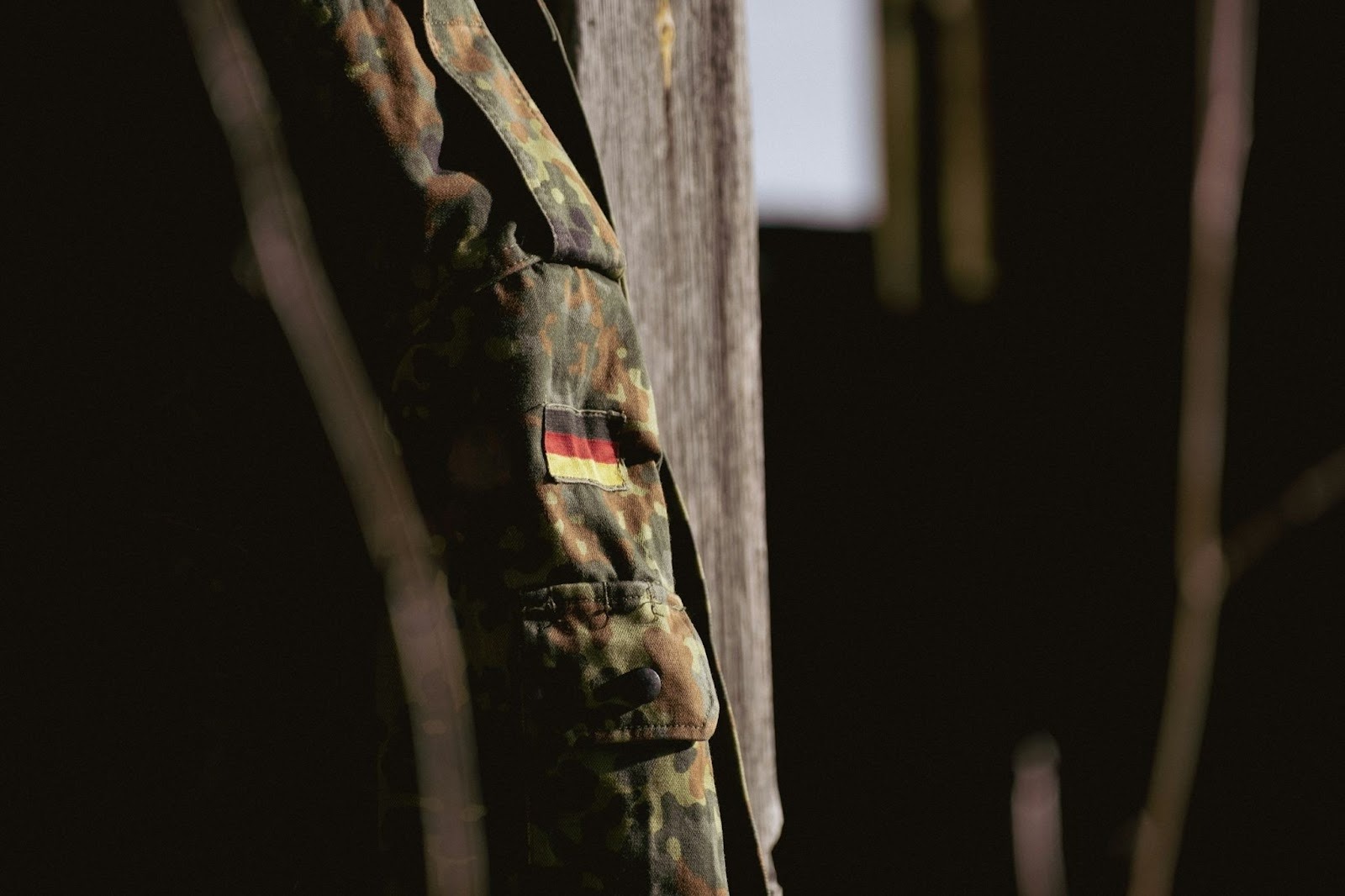
A German military uniform. A new reform could require teenagers to serve if too few volunteer. (Photo by Unsplash/Touko Aikioniemi)
By Vitus Studemund
Captain Mike Siebert stands in his military uniform in a Berlin classroom, surprised that many students did not even notice the news that had been everywhere for days. “Some didn’t realize how this could actually affect their lives,” he says.
Since Russia’s full-scale invasion of Ukraine in 2022, Europe has edged closer to war than at any point since World War II, and governments across the continent are rethinking how they would defend themselves. A major reform of military service has been approved in Germany, expanding voluntary draft and, if needed, activating a mandatory lottery. The reform marks a sharp shift in post–Cold War Germany, but came without much input from the teenagers whose lives it could alter. How do they see the change? And how does a military officer who works with students make the case?
Explaining the Reform: A Questionnaire, Then Possibly a Lottery
Captain Mike Siebert, 29, works as a ‘youth officer’ for the Bundeswehr, the military’s German name. He gives more than 100 presentations and talks a year, many of them at high schools. When Siebert joins my video call, he is wearing a blue dress uniform with three silver-colored stars on his shoulder, just as he would in a classroom setting.
A week before our conversation, the government agreed on a first outline for scaling up the military: all teenagers born after 2008 will be asked whether they want to join the armed forces. A questionnaire is sent to all teenagers, but only males need to respond. If not enough people volunteer, a lottery will decide who must serve. Politicians argue the reform is necessary to ensure Germany can be ‘kriegstüchtig’—ready for war—by 2029.
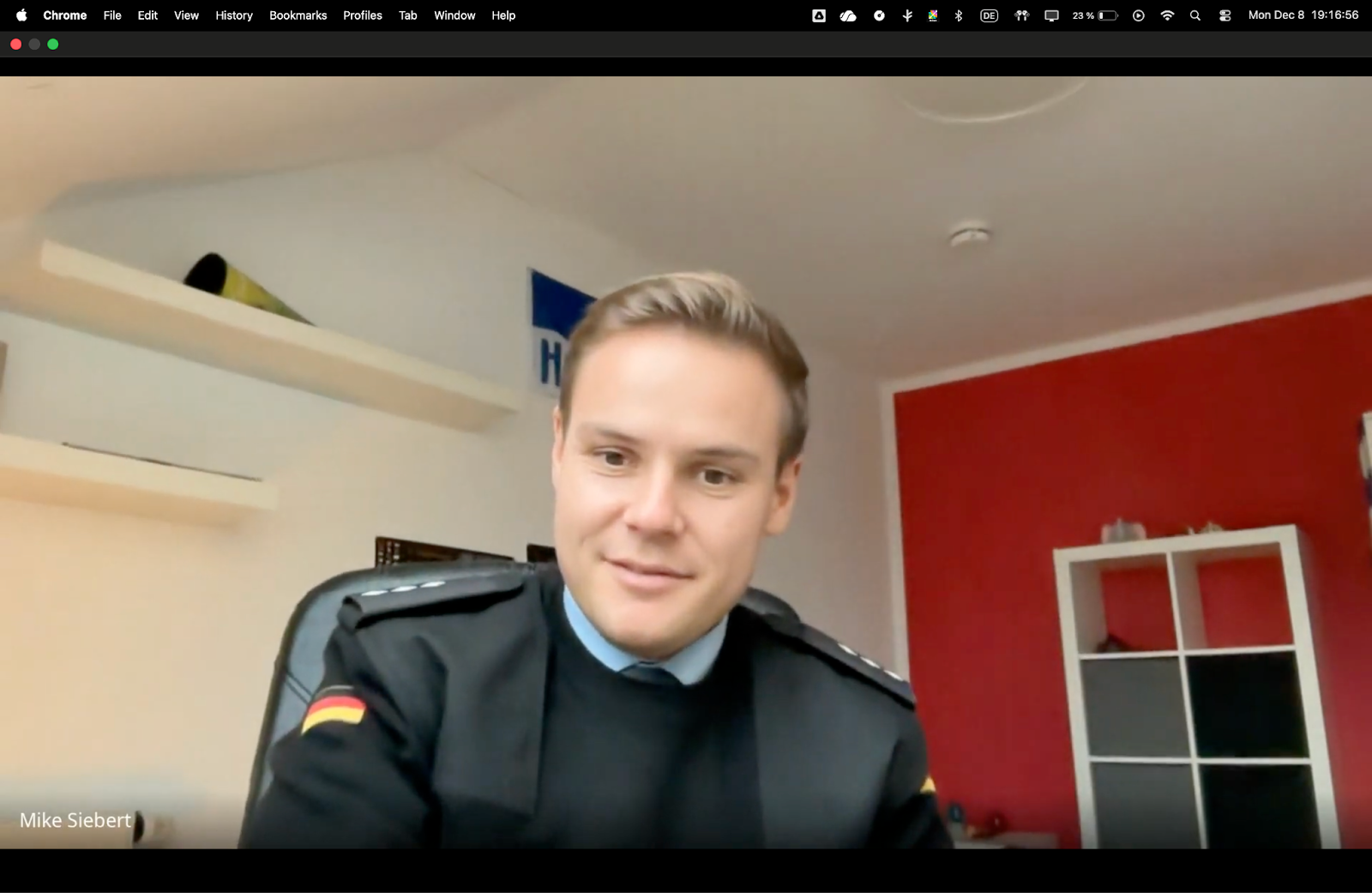
I first met Captain Mike Siebert in 2024, when he was making the case for mandatory national service. Now, he is tasked with explaining a version of that idea to teenagers in classrooms.
“A Lot More Has to Happen Before We Ever Get to That Point”
A few days after the announcement, Siebert visited another high school. He says the classroom did not feel panicked, partly because not everyone understood how significant the reform was. “[However] I tried to ease that immediate fear [many had] of ‘Oh, I’m going to be drafted into the Bundeswehr against my will,’ by explaining that a lot more has to happen before we ever get to that point.” The lottery scenario is still hypothetical, and under the Constitution, everyone drafted is allowed to object to fighting.
Speaking With Teenagers
As I speak to Siebert, I become more interested in hearing from teenagers affected by the reform that, to many adults, is abstract. I text my younger brother to ask what he thinks. His reply comes right away: “I don’t feel like doing military service, but ngl it’s important and they do need people.” A few minutes later, I call him. He is just getting back from soccer practice.
“Most of my friends aren’t really into it either. Kind of depends on who you talk to,” he says. “But you know Joel, right? He said he wants to say yes when he gets that questionnaire. He just did an internship with them and got all these free items.”
My brother is not really interested in the new reform but knows a surprising amount about it. “Our teachers are discussing this with us. And I see all the memes on TikTok”, he explains.
“I Wouldn’t Have Even Voted Yet”
I talk to other teenagers too—people from my old high school, kids from church, and some I met at youth parliaments. Everyone who replies to my Instagram story asking for opinions is surprisingly critical of the reform.
“If I got drafted now, I wouldn’t have even voted yet or had a chance to help decide my country’s politics,” Frida tells me over a video call. She is 16 years old and currently studying abroad in Norway. “If Russia attacks, they’ll come here,” she says, people in her town believe. She adds, “I am actually more critical of national service now after seeing how present the military is here.”
Fears of Militarism and the Far Right
Others question who will really bear the burden. “In a capitalist society, the ones who draw the short straw are always those from working-class backgrounds,” says eighteen-year-old Ruth. She is a few months too old to be affected herself, but fears friends getting drafted. More generally, Ruth fears that higher investments in the military could pull in teenagers who already struggle financially, while wealthier families “will find ways to keep their kids out.”
Selma, 16, notices polarization among her peers: “The atmosphere at school is getting rougher,” she says. “Some people in the schoolyard talk like Hitler and say this service is exactly what our people need.” The new law comes at a time when the two highest polling parties among German first-time voters are the socialist Die Linke and the ultra-right AfD. “The draft lottery feels like The Hunger Games,” she says, “the state literally draws lots over people’s lives.”
Support for the Draft Falls With Age
Objections from youth are a main argument of the German left: “Young people weren’t in the room when the bill was negotiated,” responds a socialist MP from Die Linke in an e-mail to me. “It’s telling that support for conscription comes mainly from older generations, while younger people, the ones who would be compelled to carry weapons, reject it by a clear majority.” The claim is backed by survey data: There is no polling yet on the specific reform, but earlier surveys show broad public support for a mandatory military service in theory, with a stark generational divide. Among polled adults under 29, only 30 percent favor the idea, and only 14 percent say they could imagine serving themselves.
Just a few years of geopolitical change and the luck of my birth year mean I will never have to worry about being drafted. But after all the early-morning calls, late-night texts, and hours of research, I feel uneasy for the teenagers I spoke with, many of whom are still forming their political identities. Regardless of their opinion, none of them got to vote on this law that could change their lives. And as long as teenagers are left uncertain about whether they could be randomly drawn after finishing school, what this means for Germany remains unclear.