In a borough where food insecurity runs deep, a half-acre farm in the Bronx is doing more than growing vegetables. At New Roots Community Farm, refugees and local residents cultivate tradition, community, and dignity.
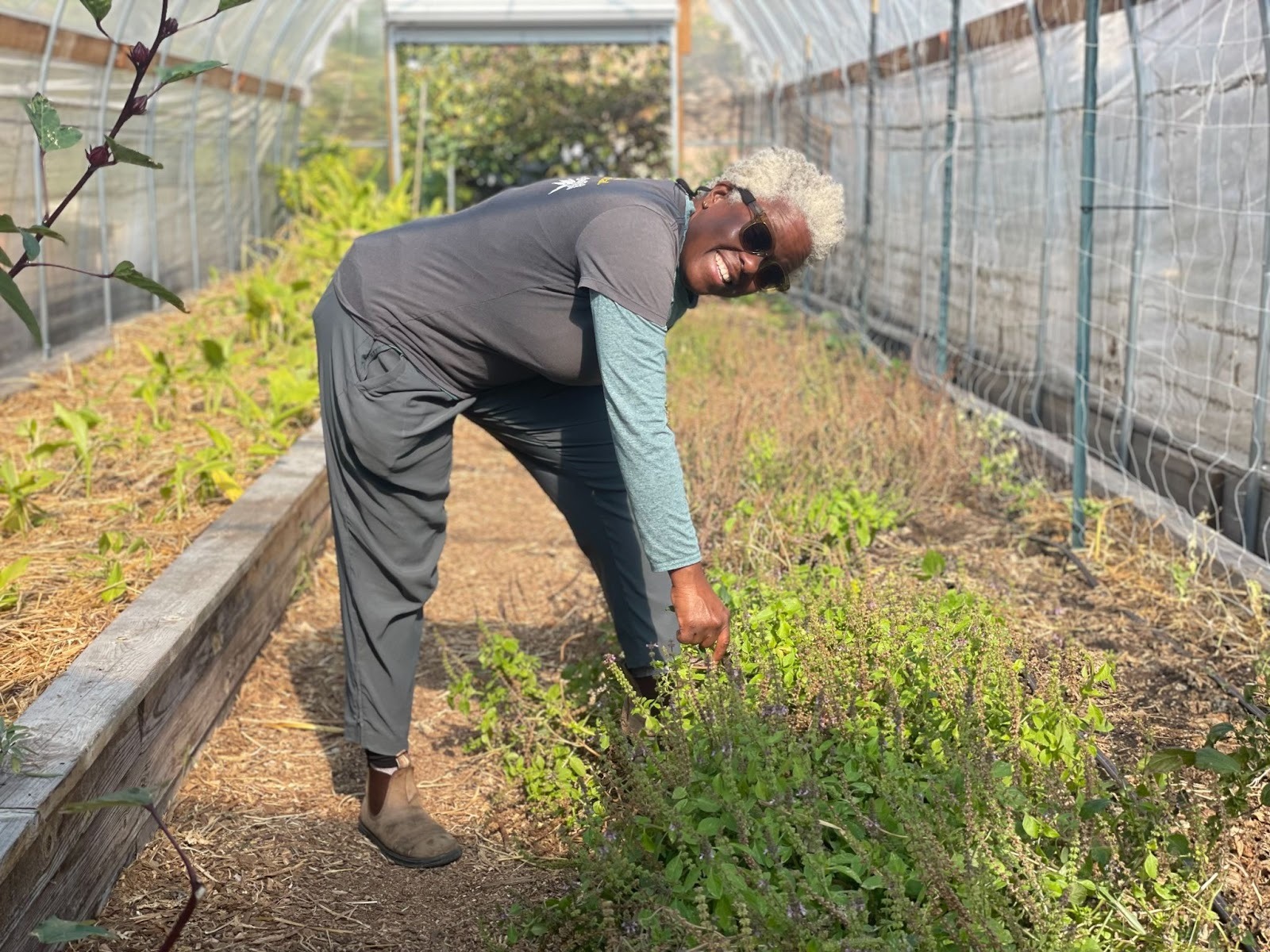
Sheryll Durant, Food and Nutrition Coordinator at New Roots Community Farm stops for a quick smile as she removes weeds from the greenhouse. Source: Author photo.
By Deepak Padmakumar
NEW YORK CITY – On an unseasonably chilly October morning, a cross-section of immigrant New Yorkers streams through the gates of New Roots Community Farm in the Bronx – Hispanic, Asian, African American and Middle Eastern. Some pause to survey the produce laid out for sale, others are there to volunteer. “Many of them started coming during COVID,” says Sheryll Durant, who has overseen the farm for over a decade. The pandemic ended. Their visits didn’t.
Durant, mother-daughter volunteer duo Estela and Emily, and other refugee growers run New Roots. But this sliver of land is more than a farm. It cultivates resilience as much as it does vegetables. It is a community food hub, a teaching space, and a refuge. For its community, it obviates the stark choice between being hungry or homeless.
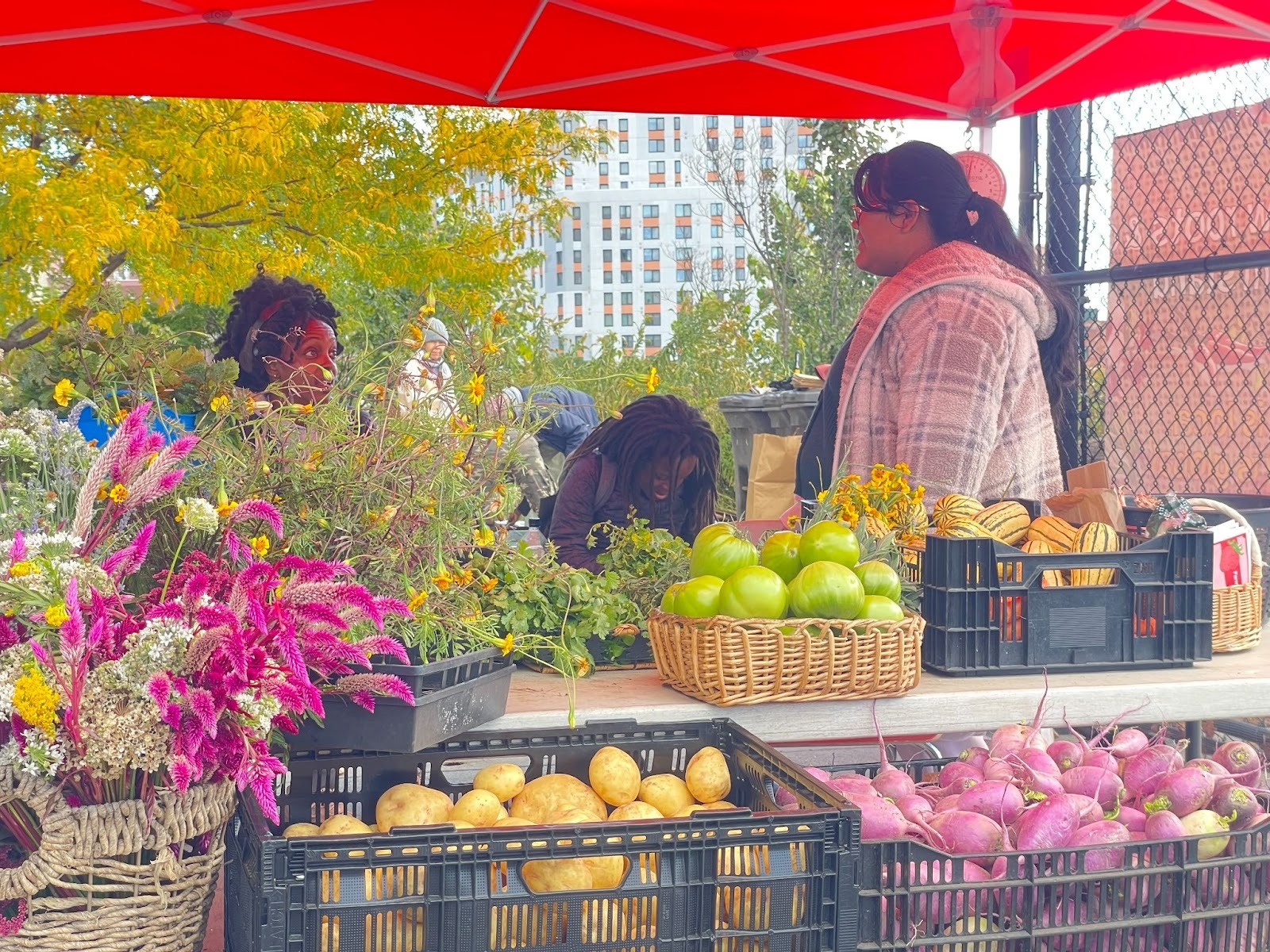
Emily managing New Roots Saturday farm stand
The Bronx farm is part of a national effort by the International Rescue Committee (IRC) which began in 2006. Somali refugee women in California requested the IRC for space, not just to grow food but also to reconnect to their heritage. They became the Bahati Mamas, the first of what is now a network of sixty-plus farms expanding food access to nearly 19,000 households.
A Farm Designed for Community
Unlike other community gardens in the city, New Roots doesn’t individually parcel out land to members. “At the start of the year, we gather and do a discussion of what we like to be grown,” Emily says. “We” refers to the volunteer farmers, about fifteen in total, who build consensus on what to grow and when. Those passionate about something different get small containers instead of plant beds.
The farm didn’t start this way. When operations began in 2011, it followed the traditional model, where members tended individual plots. But with crop replication, soil health suffered and disputes over space arose. It was inefficient and unsustainable. In 2016-17, the farm shifted to the present model, fostering community and diversifying production.
Now, a whole slate of crops fills the land: beets, eggplants, tomatoes, arugula, okra, mint, sage, strawberries, figs. There are experiments and failures— for instance, the peppers planted this year were scorched by the summer heat— as well as unexpected revelations, like mugwort, once mistaken for a weed, was discovered to have medicinal value thanks to a new volunteer.
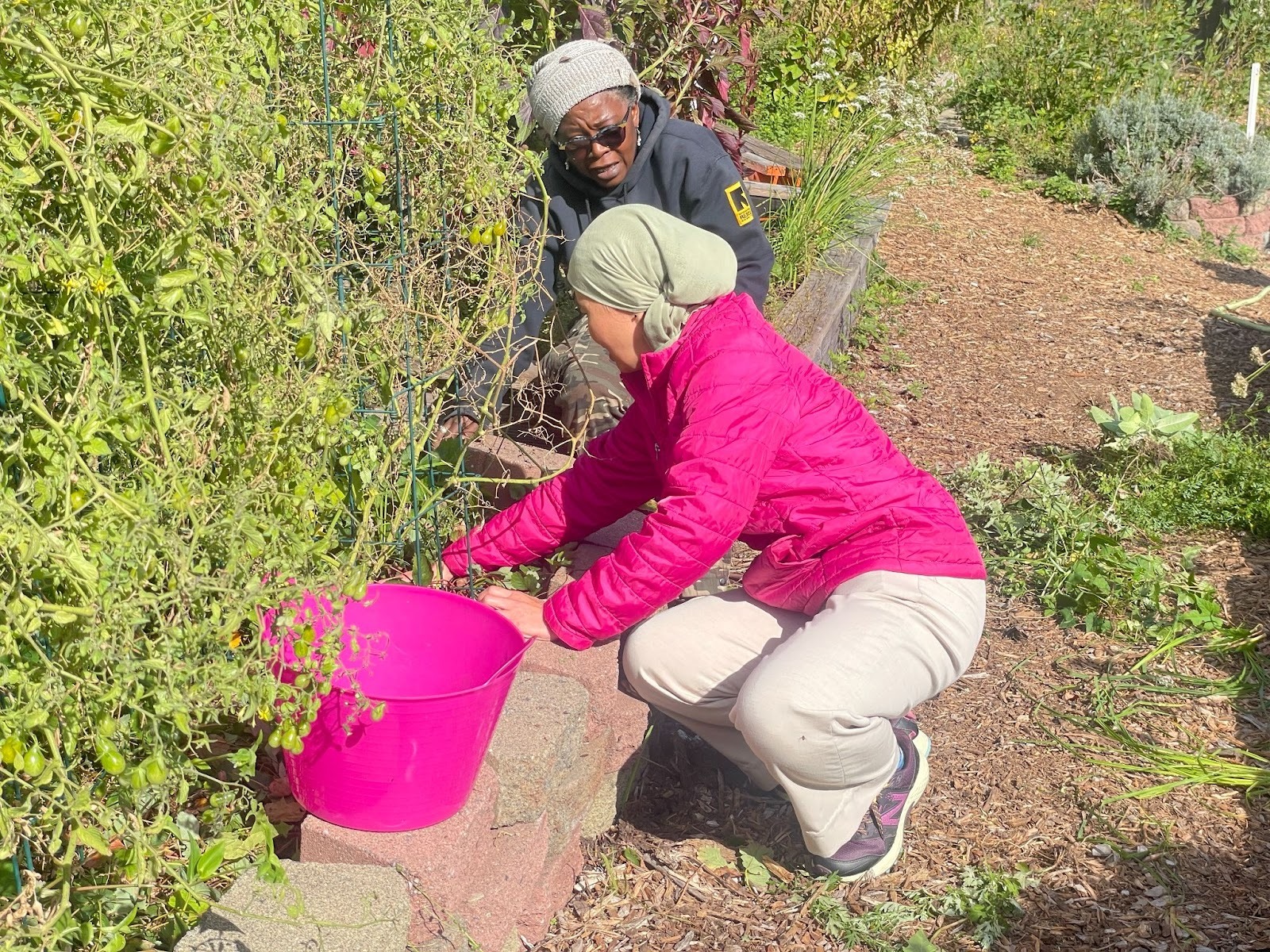
Volunteer farmers at New Roots harvest green tomatoes
Across New York City, need has outpaced paychecks. Visits to soup kitchens, pantries, and community food programs have increased by 85% since the pandemic. Two in three pantry visitors are employed, many even working multiple jobs. Yet, 1.4 million New Yorkers still face food insecurity. In the Bronx, the picture is even starker, with 65% of its working-age residents lacking the income to cover basic needs.
It is unsurprising, then, that demand at New Roots far exceeds what it can grow. The farm supports between 80-100 households. That number was closer to 200 during peak COVID. Back then, farmers donated truckloads of produce rather than let it rot. Today, New Roots supplements its harvest by purchasing organic produce from upstate partners, using government funds allocated for food-access programs. This keeps the weekly distributions running long after the cropping season.
But, at the heart of New Roots is something less quantifiable: dignity. Durant bristles at government programs that force people to sit through mandatory workshops to receive food. “Some of the hardest working people that I know are food insecure,” she says. Such conditional food access misunderstands both the problem and the people facing it.
Cultural Memory Rooted in the Soil
New Roots’ purpose is not only caloric, but cultural. “We work with refugee and community members to help them to be able to connect to the land,” Sheryll says. Many bring agricultural knowledge shaped over generations; the farm gives them space to revive food traditions they feared they had left behind.
For Estela, who immigrated from rural Guerrero, Mexico, New Roots felt instantly familiar. In her hometown, her parents grew beans, corn and pumpkins; she herself cut grapes in California before moving to New York, where she works as a cook. She discovered New Roots while walking her young daughter, Emily, to school. “A breath of fresh air,” she calls it. Soon, she was volunteering weekly, dragging eight-year-old Emily along despite protests about bugs and boredom.
That agricultural memory shows up in small moments. Estela quickly recognized purslane, which the farm treated as a weed, as a childhood staple she could use to stuff quesadillas. Today, she leads cooking demonstrations at the farm, helping neighbors turn unfamiliar vegetables into comforting meals.
Cultural exchange often happens unintentionally. Sheryll recalls when the farm first grew hibiscus or bissap, a hardy bush usually grown for its flowers. When stems began appearing mysteriously chopped down, she assumed someone was vandalizing the crop; until West African gardeners explained that they harvest the leaves for stew before the plant flowers. “Now, we grow bissap with intention,” Sheryll says: flowers for tea in the greenhouse, leaves for stewing outside.
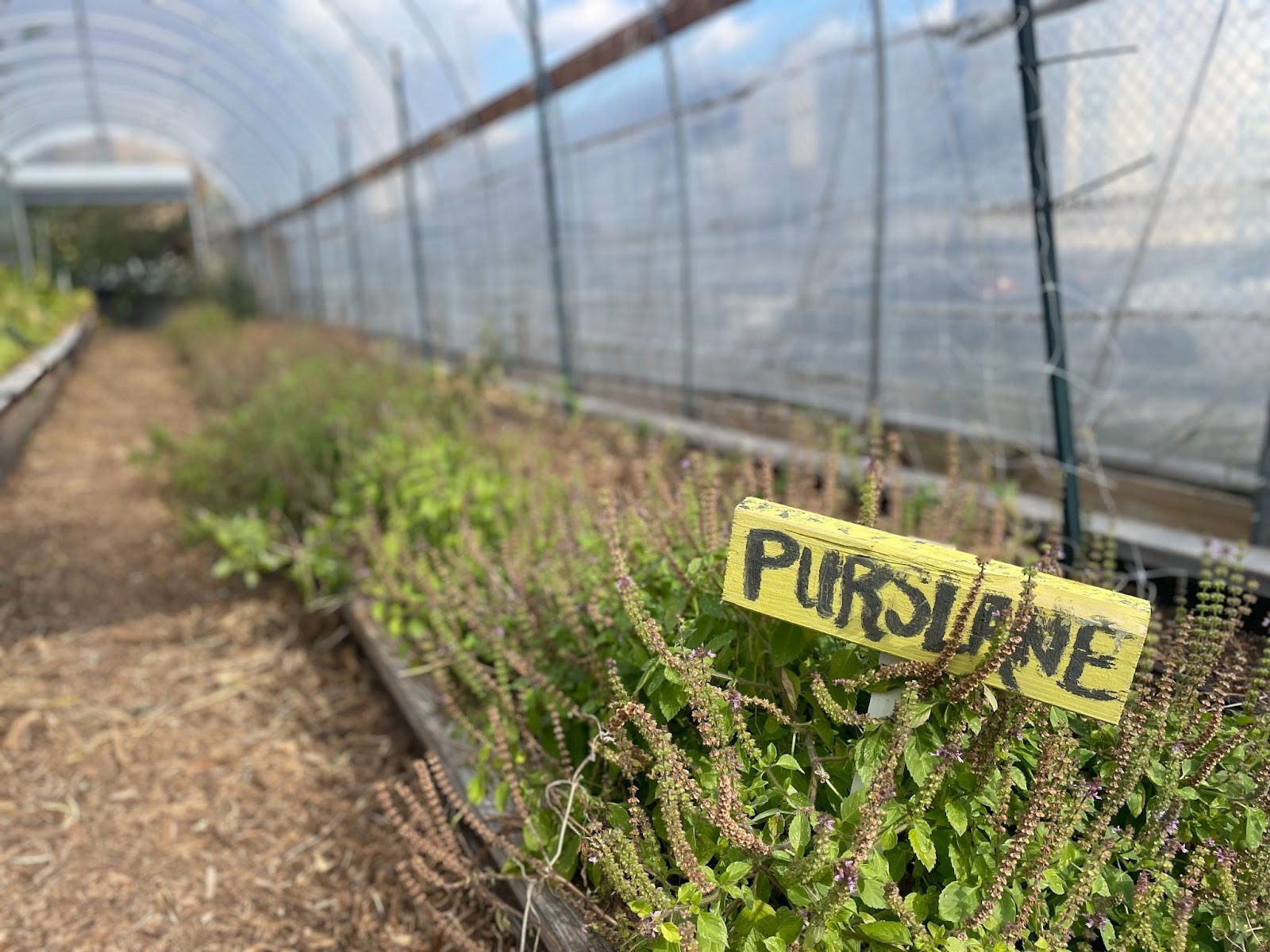
Purslane – earlier mistaken for a weed, now has a proud place on the plant beds at New Roots
Late in the afternoon, as the crowds thin and the gates finally close, the farm looks deceptively small: rows of plant beds, a quiet tunnel, a few mud-caked crates. But the people who pass through leave something behind: stories, recipes, seeds carried across borders, know-how passed from one migrant generation to another. New Roots gathers all of that and turns it into something recognizable and edible.
“Food is a gateway to all things,” Sheryll says. At New Roots, it is also a bridge, between past and present, between neighbors who might otherwise never meet, between the hunger the Bronx knows too well and the dignity it too rarely receives. This half-acre won’t fix food insecurity in New York. But each week, it makes the problem a little less abstract, a little less cruel.
And for the people who stand in line on cold mornings, or who kneel in the dirt on planting days, the farm offers something larger than a bag of produce: a root in the city.