Chinese students encounter prejudice at American universities
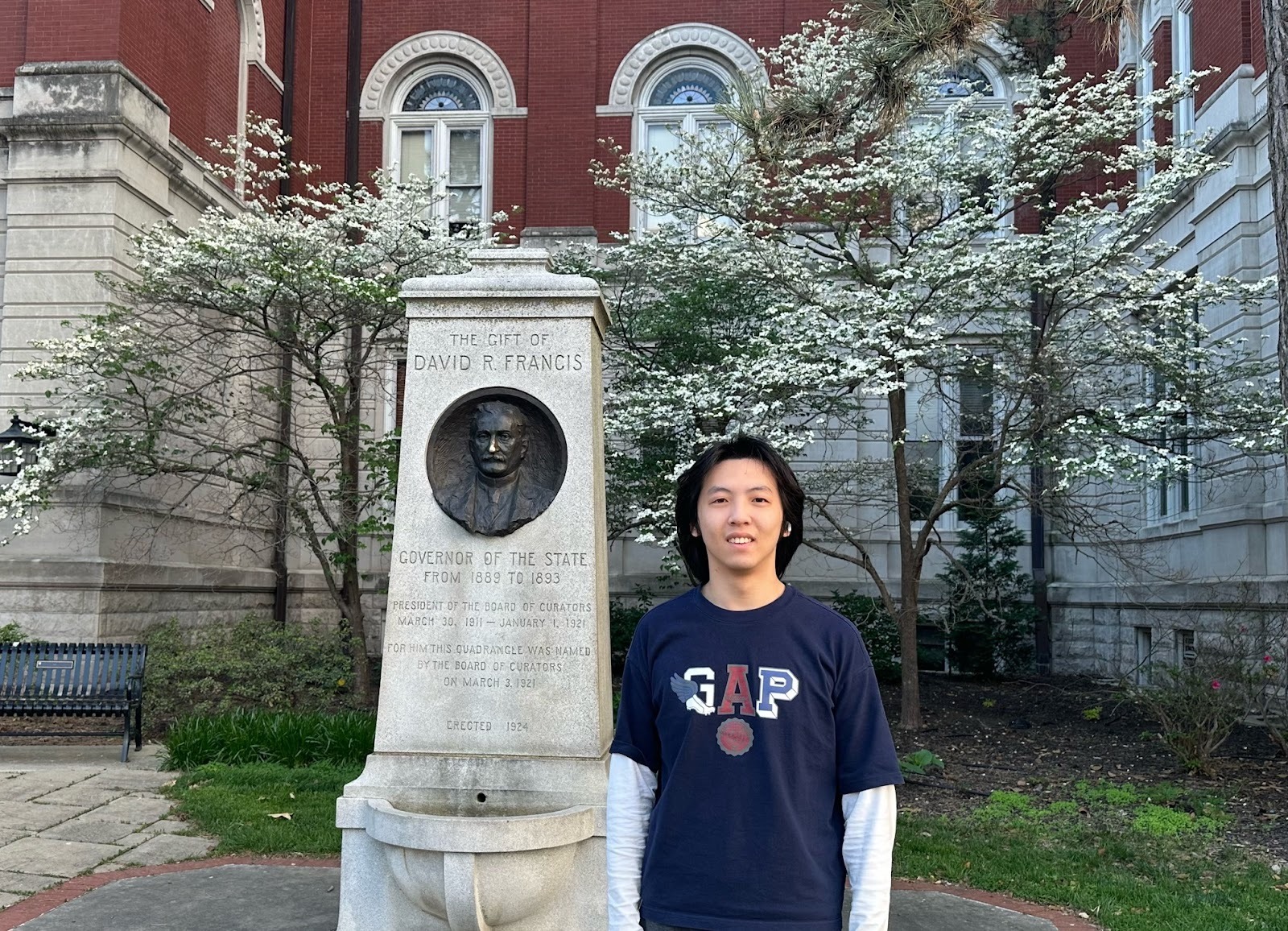
Anderson at the University of Missouri
By Civen Cao
When a Chinese person arrives in the United States, he will be marked with the identity of a Chinese citizen just like his passport. This might sound like a cliché, but the truth is, in their motherland, Chinese would not be excluded because of their poor pronunciation, nor are they regarded as outsiders because of their yellow skin.
Bining’s story illustrates the problem. Though born in China, she attended elementary school and high school in the United States due to her mother’s work. She stayed with white American families in the community from time to time also because of her mother’s onerous work.
Though so familiar with American culture, she is sometimes still judged by her Chinese nationality. During a conversation in her high school, her classmates talk about the Taiwan state. When most of them agreed that Taiwan does not belong to China, they looked at Bining, as if seeking her response.
They assumed that she would insist that Taiwan was part of China, simply because Bining was Chinese. They seemed to think she would enjoy debating with them just like what Chinese people did in international news reports. But the truth is, Bining didn’t want to express her opinion on this topic, nor did she want to oppose the majority.
“At that time, I felt peer pressure. Someone told me not to express my political views in the US, because this is not China. so I remained silent,” Bining said.
What she did was the typical reaction when Chinese students abroad face prejudice: remain silent. According to the nonprofit Act To Change, which surveyed students in 2021, the majority of bullied Asian students didn’t tell an adult about their experience. The reverse was true of bullied students from other racial groups.
Asians may have experience less violent discrimination than African Americans, but a stereotype and disregard for other cultures permeates the Asian experience in the U.S., which also increases the cost for Asians to adapt to American culture.
Even Bining, a Chinese person who lived in the U.S. for so many years, would still be judged by her classmates because of her nationality, not to mention those who come to America just several months.
Anothe examples comes from Anderson, a Chinese student at the University of Missouri. He came to Missouri as an exchange student in his junior year. Before he came to America, he had never used Amazon or Youtube, and after he ended his college career, he was still neither accustomed to using Whatsapp nor chatting with friends in English at a normal speed.
Normally, he didn’t mind some of the differences in treatment between identity groups. He thought that when his classmates greeted him in Chinese or hoped to learn some Chinese from him, it was quite acceptable, even interesting.
But he hated it when the group members ignored his words during group discussions. Most of the time, Anderson could only watch his classmates typing at a fast speed without using Google Translator. When discussing the homework on WhatsApp, the group members hardly asked for his thoughts, nor paid attention to his opinion. At most, they would comment after he spoke, “OK, now everyone has already presented their ideas,” but they wouldn’t reply to Anderson’s message specifically, not even willing to reply to him “very nice” or put a heart sticker on his message.
“Especially if I found that someone in the group was a brotherhood or sorority, those who stuck Greek letters on their computers, then I know the group discussion has nothing to do with me, ” Anderson said.
Worse still, he couldn’t join the members’ gossip either. He couldn’t understand the fast-paced and accented speaking of the group members, and they would also not invite him to join the chat. They just think Andrew might not know which sports star, or which brand they are talking about.
“Because I’m an Asian,” Anderson said angrily, “If I were a Spanish, even if my English was not so good, they wouldn’t treat me like this.”
Though what Anderson said offers only a partial account, his experience reflects an important obstacle that hinders Chinese students from adapting to American life.
When I talk with Bining, she often talks about the word “protect.” She mentioned that many immigrants join Christianity because the church could protect them from being judged and offer other help. Bining also tried to create an international club to protect the minority culture in her school. They held activities at the worlds’ traditional festivals such as Mexico’s Day of the Dead, Chinese New Year, etc. However, these activities usually failed to attract local students.
“Most of them would simply walk past when they saw our events. Only a few students who were very close to the club members would join,” Bining said.
Maybe this is also the reason most Chinese usually live in Chinatown, and don’t want to go to other places in America, just to protect themselves. Ironically, many native did think Chinatown is a tourist place and has no relationship with real American life.
But things could be different. I’m also a student who just came to America like Anderson. Sometimes I couldn’t understand what my classmate said, nor follow up with the teacher, but they treat me without bias. They would admire the photo I shared at the Chinese Mid-autumn Festival, they respect my speaking and sometimes help paraphrase my vague part. And also, I could provide a new perspective to enrich our homework.
So maybe a special care, such as extra help when talking about homework, additional instruction when an Asian is taking teachers’ office hours, or even simply adding the English caption when watching videos in class, then Asians might be accustomed to American life easily. Correspondingly, they would also contribute their talent to the class, even to American society.