A North Korean defector on never fully leaving home
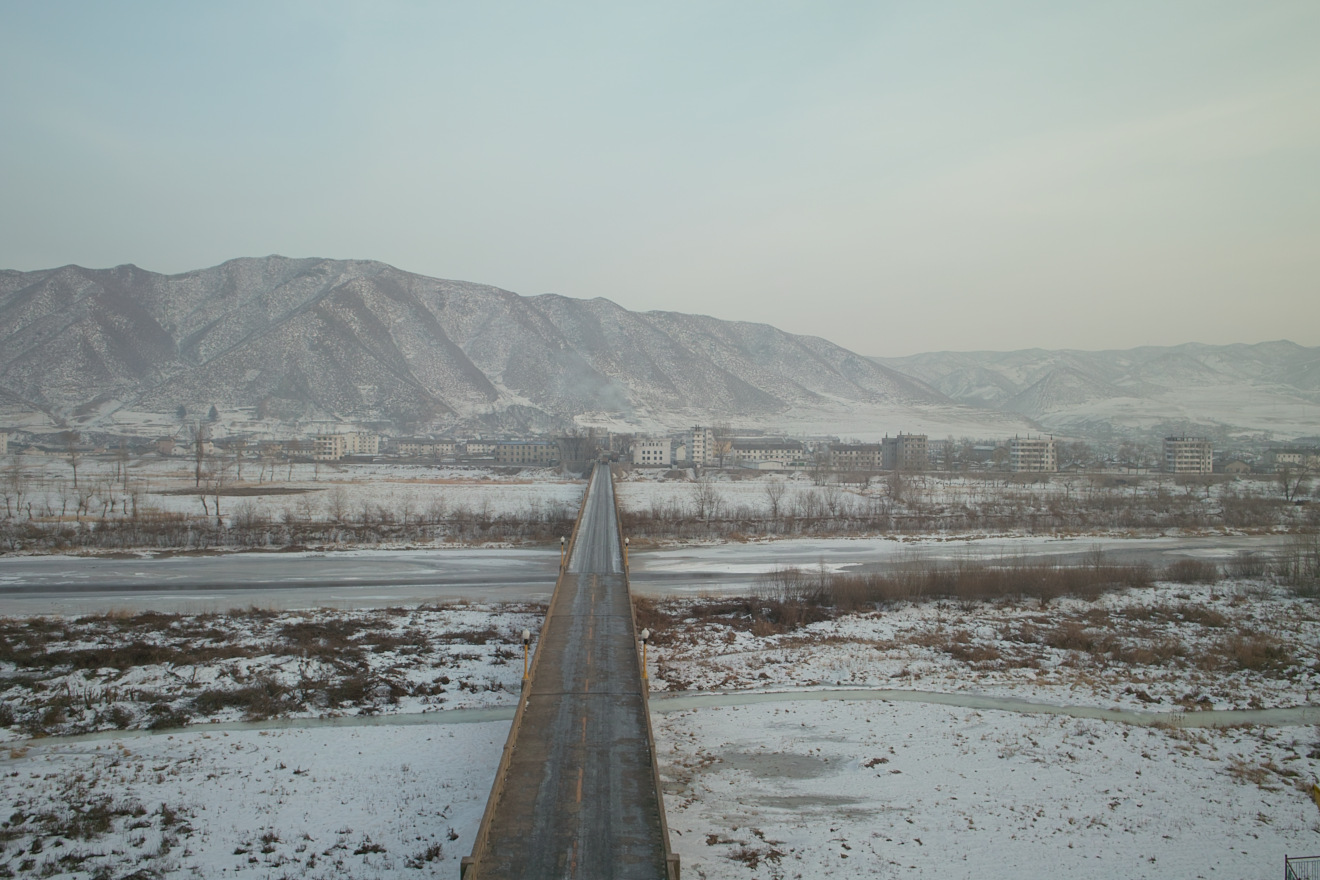
The Tumen River bridge. Source: Wikimedia Commons
By Olivia Choi
The river still visits her in dreams. Sometimes the ice holds. Sometimes it cracks before she reaches the middle. She wakes in her small apartment in Incheon, sweat dampening the sheets, the hum of the refrigerator replacing the wind that once cut her face raw.
I first met Eunji Kim earlier last year while conducting research on North Korean resettlement. I can’t name the organization that connected us, but it supports defectors adjusting to life in South Korea. Until I spoke with Eunji over Zoom, the stories I’d heard had remained abstract — summaries, case files, statistics. She made those narratives come alive for me.
Eunji crossed the frozen Tumen River in 2014. She was twenty-three and had never left her village in North Hamgyong Province. On that night, the border didn’t look like a line between countries. It looked like something breaking open. She remembers her companion’s trembling hand, the sharp cold, the way her breath wouldn’t steady.
“I thought I was dying even before I started walking,” she tells me now.
The crossing lasted no more than five minutes, but it split her life in two. On the far bank in China, her shoes soaked through with ice melt, she realized she could never go back. The river was behind her, but something from it stayed inside her, shaping everything that followed.
The weeks that followed blurred into a half-awake haze: safe houses, bus rides, whispered instructions from brokers she couldn’t trust. China was both a refuge and trap. She spent months hiding in small towns near Jilin, cooking and cleaning in exchange for food. At night, she practiced new names, new accents. She avoided windows.
When she finally reached South Korea through a church network, she imagined it would feel like homecoming. “I thought it would be like stepping into sunlight,” she says. “But Seoul was too bright. It burned.”
She was taken first to Hanawon, the government resettlement center south of Seoul where new defectors spend months learning how to live in a capitalist society. The classrooms were painted pale yellow, with posters explaining things like bank accounts, subway cards, and taxes. She learned that freedom had a price tag and an application form.
“They told us we were lucky,” Eunji recalls. “But I felt like a child again, learning how to cross another border, this time invisible.”
At Hanawon, she struggled with the noise: doors slamming, phones ringing, the constant announcements over the loudspeakers. The sound reminded her of the spotlights sweeping the riverbank. Even years later, loud noises make her flinch. “I still can’t stand walking over bridges,” she says. “Even the Han River, I go around it if I can.”
When she finally left the center, she rented a single-room apartment in Incheon. The NGO that connected us helped her find a job at a cosmetics factory. The work was repetitive, but steady: sorting bottles, attaching labels, sealing boxes. She liked the rhythm, the way it kept her thoughts busy.
Yet even in safety, the past leaked through. Her co-workers were kind but curious. They asked where her accent came from, why she avoided company dinners. One night, a manager asked if she had ever been to Pyongyang. She laughed too loudly, deflecting the question. “You learn to build a fence around your story,” she tells me. “Too much truth makes people uncomfortable.”
She spends weekends volunteering with the NGO, helping newer arrivals navigate paperwork or find housing. She has become fluent in the bureaucratic dialect of the South, subway lines, job portals, health insurance. But she still keeps her apartment sparse.
“I don’t like having too many things,” she says. “You can’t carry much when you have to run.”
Her sense of time fractured after the crossing. “Everything before that night feels like someone else’s life,” she says. “Sometimes I forget my own mother’s face.” She pauses before adding, “I think that’s how you survive – you let parts of yourself freeze.”
In Seoul, she has learned the language of performance. She laughs at jokes about K-pop celebrities and wears muted makeup. But in quieter moments, she feels the river rising again. It comes in flashes: the reflection of wet asphalt, the sharp scent of winter air, the sound of ice clinking in a glass.
Eunji once dreamed of becoming a nurse, but her education from the North didn’t transfer. Instead, she takes night classes in social work, hoping to help other defectors rebuild their lives. “I want to be someone who listens,” she says. “Because when you escape, you lose your language. People talk at you, not with you.”
Her classmates are mostly much younger. They talk about politics and reunification like distant theories. When they ask about her background, she simply says she’s from “up north.” Few press further. “I think they don’t want to hear details,” she says. “They want the version that fits the TV documentaries – the brave defector who finds freedom. But the truth is quieter. It’s the silence that never ends.”
Once, during one of her first winters in Seoul, snow began to fall as she walked home from work. The flakes melted on her coat, soaking through to her skin. For a moment, she stopped near Incheon Station and looked at the water shimmering under the city street lights: it wasn’t the Tumen—far from it—but for a moment it shimmered with the same pale blue. She leaned over the railing and felt her heartbeat quicken, that old fear rising uninvited.
“It’s strange,” she tells me. “You cross once, but you keep crossing again and again. Every time life changes, the river is there.”
Now, nearly a decade later, Eunji measures her life by the distances crossed: between North Korea and China, between the woman who ran and the one who learned how to stay. Between survival and something closer to belonging.
When I ask her what freedom means now, she pauses. “Freedom,” she says slowly, “is when the river in my head is finally still.”