The story of every immigrant to the United States starts at home.
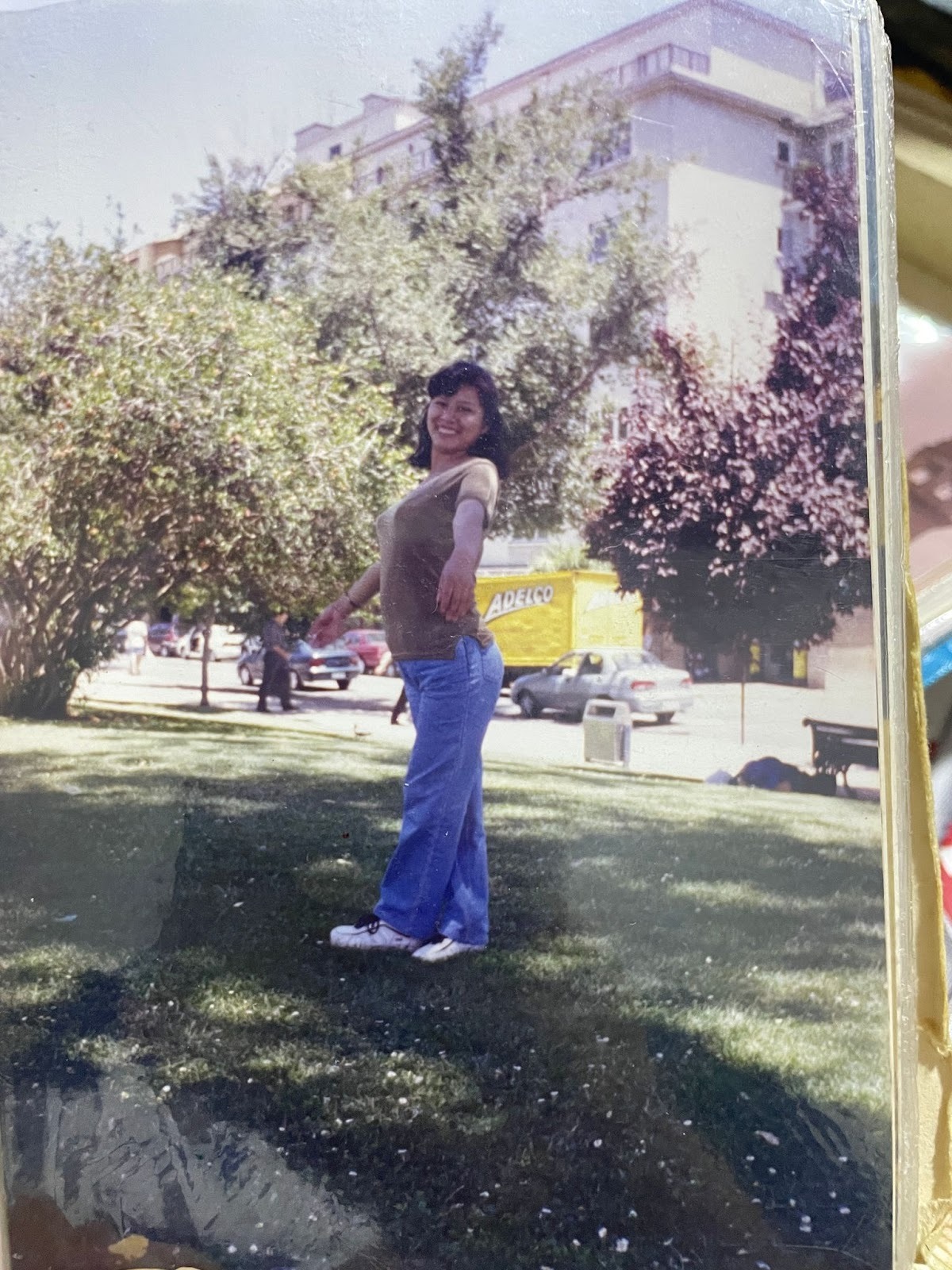
Rosa Tabraj in Lima, Peru. 1996. Photo courtesy of Rosa Tabraj Fabian.
By Valery Tabraj Huaccachi
My relatives immigrated to the United States from Peru at different times. While some Americans today consider immigration a crisis, my family has found a strong community in Maryland made up not just of Peruvians but of immigrants from all over the world.
As part of a family with mixed immigration status, I’ve spent my whole life immersed in the complexity of immigration at the individual level. The political debate over immigration often feels abstract to me. I wanted to reconnect to the tangible and tell the stories of people’s decisions to leave their home country and form a new home in the U.S. Let me introduce you to my aunt, Rosa Tabraj, my cousin, Margaret Rojas, and my cousin’s husband, Bryan Quispe.
Hearing these stories reminds me that immigration has changed my family’s path for the better; it has enabled my cousins to have a better life here, where they can work or study. At the same time it shows that over generations, the extreme poverty that my aunt was raised in, was not the same reality for my cousins.
Rosa Tabraj Fabian
Rosa is my aunt. She is 47, from Concho, a small village in Junin, Peru.
She immigrated to the U.S. in December of 2000. Rosa’s cousin, who lives in the U.S., proposed to her the idea of coming to the U.S. “ if I wanted [to], I needed to come now,” the cousin told her. Rosa did not consult with anyone else about going to the U.S, and felt firm about her decision.
Rosa heard from friends that life in the U.S. was easy. Growing up in a village where she struggled to earn a living, she wanted a more stable life for her family. However, Rosa’s reality was different from her initial expectations.
In just one week, Rosa made all the arrangements to go to the U.S.
Only Rosa’s sister knew of her plans, and her husband discovered she was going to the U.S. while she was en route. Three months later, he joined my aunt in the U.S. Rosa did not know the journey in detail since she was the first in her family to go to the U.S. Later, her siblings joined her in the U.S.
“My decision hurts me a little because I did not see my mother again,” said Rosa. Rosa saw her mother one last time before she moved to the U.S., about 25 years.
She currently works as a house cleaner. She is a mother of three, one of her children works in school administration, and the other two are in high school.
Bryan Quispe
He is 29, and he is married to my cousin. He is from Arequipa, Peru, and currently lives in Maryland. He completed three years of university studying electrical engineering in Arequipa.
Bryan was unsure about his electrical engineering career. In 2015, this career had not taken off yet, and there was no “path set forward,” said Bryan.
Bryan’s sister was in an English Intensive Program in Dallas, Texas, and invited him to do the same. “I told him that I would survive on my own,” said Bryan to his father, since it was hard to always need the help of his parents because his student visa did not allow him to work.
“My parents were stressed because it was expensive to fund my living expenses in the U.S.,” Bryan understood early on that his parents would only help him financially for a couple of months. “Hearing my family’s stories of overcoming work and language barriers also pushed me to want more for myself,” said Bryan, who moved to live with his family in Maryland and was given work.
“I had a lot of expectations of this country. I was confused about how things were going to be. I believed in the things that this country would give me, opportunities,” said Bryan, who felt that coming to the U.S. was an escape to an unknown future which was better than no future at all.
He currently works as a project manager in construction in Maryland and has a 10-month-old son.
Margaret Rojas
She is 26, from Lima, Peru, and she earned her bachelor’s in communications in Peru.
Margaret migrated to the U.S. three years ago. Margaret’s mother and older brother went against the idea of going to the U.S. because they believed that her government job was a good future for her. “I realized there was no clear pathway for promotion for me. I felt saturated with work and stuck at the same time” Margaret expressed. She aspired to have more in life but even with her income, she could not afford an apartment in a safe area or a car.
“If I wanted to buy an apartment in Peru, it would have to be in dollars,” Margaret felt frustrated at not being able to save money in Peru to buy a car or rent an apartment in a safe area. After all, it was hard to save in soles, Peru’s currency, for an apartment that was sold/rented in dollars and its soles equivalent. “In just one month of being here [the U.S.], I was able to save to buy a used car,” said Margaret, who felt she could not obtain these things in Peru. “You are destined to always live in a low socioeconomic area, that is not safe” Margaret explains her wants to build more financially which was not possible for her in Peru.
“Even though I am not doing something I want, I am thankful to be here,” reflected Margaret, who now aspires to become a manager at the hotel where she works, and eventually buy a house, and have a family.
Currently, she works cleaning hotel rooms and has a small videography business in Maryland.